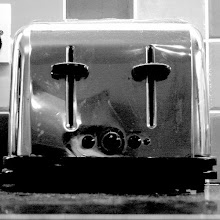
The Final Chest of Drawers with sound added
Thursday, October 22, 2009

Tuesday, October 20, 2009


Friday, October 16, 2009
What Kind of shelves?
I have decided on shelves because I don't want to sit the TVs on a plinth or a table but what kind of shelves?
-Four separate shelves, one for each TV?
-One long shelf, will have less room to play around with layout than four separate shelves, plus will nned to be a lot more heavy duty to hold all four
- White shelves? To dissapear into the wall? Probably the best option, in my critique they said I was "over doing the retro aesthetic", so plain white shelves will solve this problem
Saturday, October 10, 2009

Plan for hand in
I am planning to have four TVs on one wall, or in a corner of a room, possibly facing in towrds each other so they look like they're having a conversation. I'm in the process of finishing my four final animations, and they are looking quite good. I have tried to animate them using only added eyes, so their blinks and movements are quite important. I plan to add sound to them, just the sound the actual object would make,
Kettle-Boiling noise
Tap-Turning on and off
Drawers-Opening and closing
TV-Static
I have made each animation about 1 minute long, but I am not making them all the exact same length because for the final I would like them to be turning on and off at different times, with short periods of black between each loop. Basically what I am trying to achieve with these short animations is a short snippet in the day of an inanimate objects daily routine, which in turn will prompt people to consider their own daily routines, and think for a moment about all the appliances and objects we surround ourselves with that we never really give a thought to.
Objects we take for granted
http://www.design-emotion.com/2009/07/24/sustaining-the-human-object-relationship/
There are many objects we interact with on a daily basis which help us meet our basic needs, which we take for granted. We no longer recognize or acknowledge the object for anything other than the role it plays in helping us satisfy our needs. My thesis work, Emotional Objects, explores animating products as a valid technique to engender a deeper emotional connection between objects and their users.
In his book, Emotionally Durable Design, Jonathan Chapman discusses the current state of consumer culture, and the impact this has had upon product design. Chapman believes that through our modern fixations with: technology, the surface characteristics of products, and being able to quickly generate sales; we have inadvertently designed away the more poetic and enduring characteristics of our material culture. As a result, Chapman argues that durable attachments with objects are seldom witnessed in our current consumer climate. He hypothesized that the only way for products to healthily sustain their interactions with consumers is for them to “possess a diversity and pluralism of character”. Looking at objects from this viewpoint, I find that many products within the current model of design are static and non-evolving. In sharp contrast, their users are constantly changing. It can be suggested then, that in order to form a stronger, more satisfying bond between a product and its user, designers must learn to embrace unpredictability and design objects that create situational variety.
In order to better understand human emotional attachment, I investigated the work of Harry Harlow, a prominent American psychologist in the 1950’s, who demonstrated the importance of tangible affection in social and cognitive development. Harlow studied infant rhesus monkeys to analyze the development of emotional attachment in infants. At the time, the commonly held theoretical position was that affection is an innate drive developed through the repeated association of the mother with reduction of the primary biological drives, particularly hunger and thirst. Harlow questioned this hypothesis, and focused instead upon the influence that bodily contact plays in attachment formation. Through his experiments, Harlow discovered that contact comfort was the overwhelmingly important variable in forming a bond between the infant and its mother, rather than nourishment.
Harlow’s experiments highlight the important role that our sense of touch plays in forming emotional attachments. According to Japanese designer and author of the book Haptics, Kenya Hara, “everything occurs on the skin”. By heightening the senses and blending them through design, we can begin to restore users to a more direct experience of the world, which, according to Hara, modern technology has diminished. I see the field of haptic design as a way to bridge technology and feelings, allowing us to create deeper connections and more complex sensory interactions between objects and their users.
This understanding of the relationship between emotional attachment and the senses, has led me to investigate the roles that touch plays in our everyday interactions with objects. For example, human comfort is very closely tied to temperature, with its extremes, both high and low, capable of causing discomfort and even harm through touch. We instinctively know that a metal chair should feel cooler to the touch than a wooden one. We wrap both hands around our coffee mug and hold it close to our chest to warm us on a chilly day. From these observations I developed my thesis work, Emotional Objects, in which I modified three everyday objects in order to actively call attention to their dynamic relationship with heat, and to provide the user with a deeper understanding of their interactions with these changing environmental conditions.
A teacup that shivers in response its tea going cold. A metal chair that heats up when you sit in it, revealing its aspirations to be warm and comfortable. A pan whose handle becomes impossible to grasp when it is too hot to touch with bare hands. The animate characteristics of these everyday objects allow them to facilitate meaningful interactions with their users by actively responding to their environment and evolving through their conditions of use. They inform the user about what they are, where they live, and how they should be used. By incorporating dynamic behaviors into an object’s design, I believe it is possible to create emotionally satisfying bonds between products and their users. Perhaps in this manner, we will begin to create new forms of sustainable and emotionally satisfying human-object relationships, and positively impact our current culture of consumption.
Friday, October 9, 2009


Double act put humour back into artGilbert & George's retrospective had me in stitches
Pair of jokers ... Gilbert& George at Tate Modern. Photograph: Sarah Lee
You're not meant to laugh in art galleries. Like libraries, there's an unspoken golden rule - you must observe in silent contemplation.
But when I went to see Gilbert & George's retrospective at Tate Modern the tutting was almost deafening. It was my fault. I just couldn't stop laughing. Like a mad man. Ha ha ha-ha ha! Major Exhibition has been the funniest show to hit London in years. And Gilbert & George are one of the great comedy double acts.
Others have noted the similarities between Gilbert & George and Morecambe and Wise. It's a mildly amusing conceit that doesn't go beyond one of them being taller with glasses, and the other being shorter without. Oh, and they both they live in the same house. In The Words Of Gilbert & George - an extremely funny book, by the way - George is asked about this and deadpans; "One of us is not dead."
No, Gilbert & George are more like Derek and Clive. It's life seen through the gin-soaked tears of two clowns; their respective videos Gordon's Makes Us Drunk (1971) and Derek And Clive Get The Horn (1979) are portraits of the pissed artists every bit as depressing as they are hilarious. Derek And Clive's brief burst of glory was at the arse-end of the 70s, just as Gilbert & George came to artistic fruition with The Dirty Words Pictures (1977). Both were intuitively punk. And they knew that the fastest way to an Englishman's chuckle-muscle was not just to swear loads, but to expose our total unease with our own bodies.
I actually prefer what Woody Allen might call "the early, funny ones". In keeping with G&G's manifesto, Art For All, you can see these for free. In the concourse at Tate Modern is my favourite; George The Cunt And Gilbert The Shit (1969), two portraits of the artists as young men adorned with these very legends. In the cafe, you can watch the film of them doing their sublime Bend It dance in The Singing Sculpture (1969). In bronze face-paint and dancing like robots from 1984, this anticipated Kraftwerk's camp futurism schtick by several years. Both pieces are warning signs before any idiots wander into the exhibition by mistake: "Do not take us seriously!"
Now, I know what you're thinking. "But Gilbert & George are awful! They say they love the Queen and they vote Tory!"
Oh come on now! Can't you see that's been their biggest joke of all?
Tuesday, October 6, 2009
Humour in Art?
http://www.guardian.co.uk/artanddesign/artblog/2007/aug/14/isthereroomforhumourinar
Is there room for humour in art?
In this current climate, is it morally wrong for artists to be anything other than deadly serious? What happens if they just want to make us giggle?
Wandering through the national pavilions recently at the Venice Biennale, I along with many others was given pause by the South Korean entry: an installation by 38-year-old Seoul artist Hyungkoo Lee.
The main room was dark. On a long central plinth - like a catwalk, and just as brightly spot-lit - were two skeletons, arranged so that the smaller appeared to be running from another, much larger, which looked about to pounce. This narrative, together with the relative sizes of the creatures, reminded the viewer less of untrammeled Darwinism, than of old-fashioned cel animation. Tom and Jerry, to be precise.
And then, looking closer, one discovered that in fact, it was. To be specific: resin approximations of the bones of MGM's best loved double-act, complete with the implication that they had been actual, living creatures. And for the cartoon fan, it got worse: in the next room, laid out as if after an autopsy, was what looked suspiciously like the skull of Goofy.
It's not so far removed, either in terms of style or subject, from the work of Maurizio Cattelan, whose cat skeleton is currently on display at the Baltic. And, as with that artist, Lee's aim is not to provoke the typical feelings of disquiet or confusion in the viewer, but to amuse. To entertain.
In an accompanying text, he spoke wryly of his feelings of inferiority, growing up "puny" and Asian among his beer-chugging classmates in the US. (He took a Master's degree at Yale.) To overcome this, he said, he began thinking more explicitly in terms of body-image and physicality: this series, titled Animatus, was the result.
This rationale was fine - yet the crowd (and the three rooms were packed) simply didn't care. Where other pavilions were shrouded in solemn quiet, this one had a constant undercurrent of soft laughter, whispered conversations. People emerged, grinning, into the afternoon sunshine.
As such, it bought up a somewhat thorny question: is there a place for humour in art? South Korea's was one of the most conspicuously well-attended pavilions at the Giardini. But did that count, alongside the provocations of the neighbouring Arsenale, where a number of internationally-renowned artists (Jenny Holzer, Léon Ferrari) responded to the current State of Things - in particular, the war in Iraq - with anger, dismay and a fierce, startling eloquence? Is it even morally justifiable, in the current climate, to be anything less than furious?
We are trained, both as viewers and as consumers, to accept only the grave and magisterial as great. And while Romantic sturm und drang has fallen from favour - to be replaced, in our estimation, by something far less showy: the numbed impassivity that encapsulates and signifies modern life - the respect accorded the playful, the determinedly slight, has dropped even further.
If a work is light in tone - if it evokes, not reverent appreciation, but a fit of the giggles - then it is deemed frivolous, ephemeral, and unworthy of sustained analysis. In other words, Not art.
Graeme Thomson's music blog seemed to suggest that most agree there's room for humour in rock. However, while literary critics might accord Evelyn Waugh and PG Wodehouse and even, more grudgingly, Hilaire Belloc the status of Great Men, but most humorists are dismissed as hacks, pandering shamelessly to the great unwashed. (Who, it is assumed, wouldn't know their Wodehouse from a woodlouse.)
Art critics, meanwhile, might praise Lee's pop-cultural savvy, or his "subversive" Eastern appropriation of Western iconography, and the attendant notions of cultural colonialism and/or globalisation. But maybe it's simpler than that. Perhaps he just found them funny.
Monday, October 5, 2009
http://www.wonderhowto.com/how-to/video/how-to-learn-about-stop-motion-animation-theory-258516/view/
A link to a help video about the theory of stop motion
A link to a help video about the theory of stop motion
Persistence of vision
Persistence of vision
From Wikipedia, the free encyclopedia
Jump to: navigation, search
This article is about the theory on human vision. For other uses, see Persistence of vision (disambiguation).
In the lilac chaser, we see a moving purple dot (a standard illustration of the phi phenomenon). However, if you stare at the image for long enough the dot appears to erase itself. This is because the dot produces an afterimage which is green (the complimentary colour of the original dot). When the green afterimage combines with a purple dot, a gray dot is produced, exactly the same colour of the background. Now, the existence of after image is presumed to be evidence for the persistence of vision hypothesis, but as you can see here, the afterimage actually interferes with the movement of the dot. Thus the presence of after image cannot be the cause of the movement.
Persistence of vision is the phenomenon of the eye by which an afterimage is thought to persist for approximately one twenty-fifth of a second on the retina.
The myth of persistence of vision is the mistaken belief that human perception of motion (brain centered) is the result of persistence of vision (eye centred). The myth was debunked in 1912 by Wertheimer[1] but persists in many citations in many classic and modern film-theory texts.[2][3][4] A more plausible theory to explain motion perception (at least on a descriptive level) are two distinct perceptual illusions: phi phenomenon and beta movement.
Film academics and theorists generally have not. Some scientists nowadays consider the entire theory a myth.[5]
In contrasting persistence of vision theory with phi phenomena, a critical part of understanding that emerges with these visual perception phenomena is that the eye is not a camera. In other words vision is not as simple as light passing through a lens, since the brain has to make sense of the visual data the eye provides and construct a coherent picture of reality. Joseph Anderson and Barbara Fisher argue that the phi phenomena privileges a more constructionist approach to the cinema (David Bordwell, Noël Carroll, Kirsten Thompson), whereas the persistence of vision privileges a realist approach (Andre Bazin, Christian Metz, Jean-Louis Baudry)[5].
The discovery of persistence of vision is attributed to the Roman poet Lucretius, although he only mentions it in connection with images seen in a dream. [6]. In the modern era, some stroboscopic experiments performed by Peter Mark Roget in 1824 were also cited as the basis for the theory. [7]
Subscribe to:
Posts (Atom)